Zilogic at ET AutoTech Summit 2026: Reflections and Industry Insights

Zilogic Systems participated in the ET AutoTech Summit 2026, held at the Sheraton Grand, Bengaluru, from June 23–25. The event brought together automotive OEMs, Tier-1 suppliers, semiconductor companies, technology partners, and engineering leaders to discuss the future of software-defined vehicles, connected mobility, AI, and next-generation automotive technologies.
For our team, the summit was much more than an opportunity to showcase our engineering capabilities. It was an opportunity to engage with industry experts, understand emerging customer challenges, and exchange perspectives on how automotive software engineering is evolving git to support the next generation of connected vehicles.
Showcasing Our Engineering Capabilities
Our engineering team showcased demonstrations across four key technology areas:
-
Android Automotive & Embedded Linux Platforms
-
Automotive Ethernet & SOME/IP Integration
-
AI-Enabled Voice Assistant for In-Vehicle Experiences
-
TouchBot – Our custom-engineered robotic test automation platform that automates human interaction and validates system behaviour using AI-powered vision.
While the demonstrations attracted significant interest, the greatest value came from the conversations they enabled.
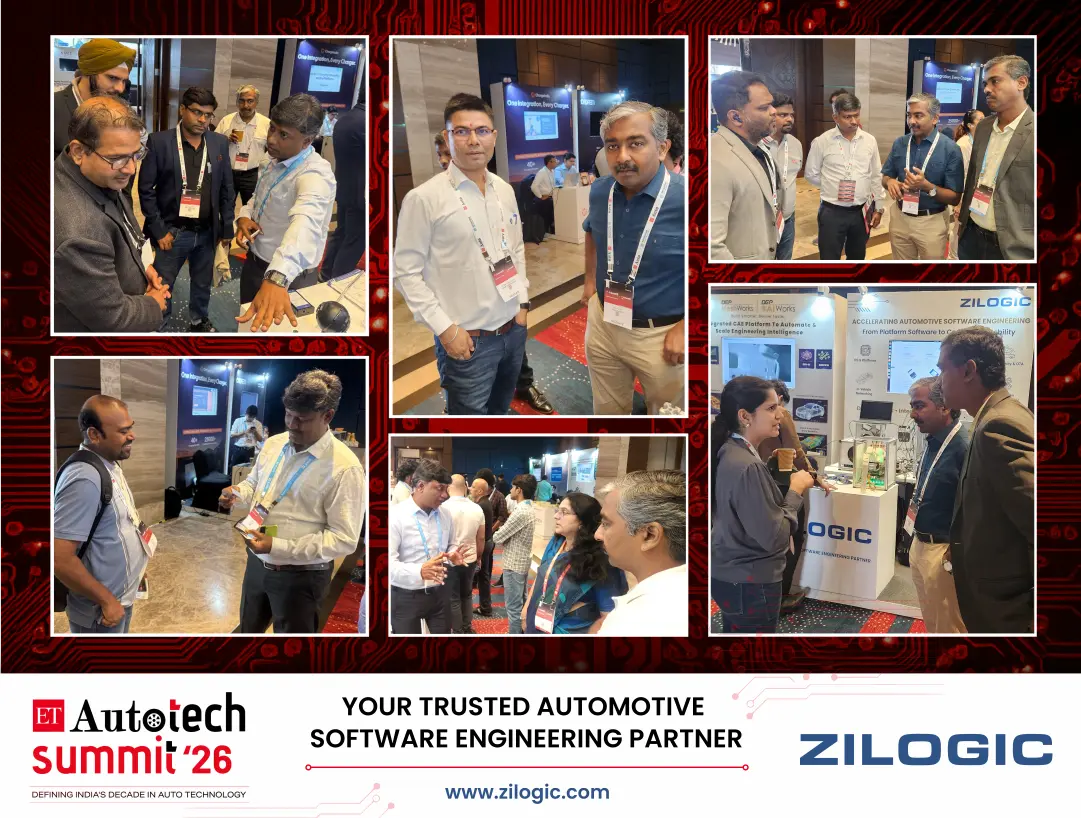
Throughout the three-day event, we engaged with engineers, architects, program managers, business leaders, and technology partners working across a wide range of automotive software programs. These discussions provided valuable insights into the practical engineering challenges the industry is addressing today, from platform integration and communication stacks to software validation, automation, and lifecycle management.
A Shift in Engineering Mindset
One recurring theme throughout the summit was that Software-Defined Vehicles (SDVs) represent far more than a technology evolution which require a fundamental shift in engineering mindset.
The industry is moving away from developing isolated software features for individual ECUs and toward building reusable, software-centric platforms that can evolve continuously throughout the vehicle lifecycle. Customers increasingly expect vehicles to receive new features, improved user experiences, and software enhancements long after production, making continuous integration, software updates, and lifecycle validation essential engineering capabilities.
This transition requires OEMs and Tier-1 suppliers to rethink not only software architecture, but also how software is developed, integrated, validated, and maintained at scale.
Key Industry Insights
Across keynote sessions, panel discussions, and technical conversations, several themes consistently emerged:
-
Software-defined vehicle programs are moving from strategic roadmaps to active product development.
-
Automotive Ethernet and SOME/IP are rapidly becoming the backbone of next-generation vehicle communication architectures.
-
AI is moving beyond experimentation into practical applications for in-vehicle experiences, software engineering, validation, and engineering productivity.
-
As software complexity continues to grow, scalable validation, automation, and continuous integration are becoming essential engineering capabilities rather than optional investments.
-
Collaboration between OEMs, Tier-1 suppliers, semiconductor companies, and engineering partners is becoming increasingly important for accelerating innovation and reducing development complexity.
Perhaps the most significant takeaway was that success in the software-defined vehicle era will depend not only on developing great software, but also on integrating, validating, deploying, and continuously maintaining increasingly complex software platforms throughout the vehicle lifecycle.
Looking Ahead
These discussions reaffirmed the direction of our own engineering investments. As the industry accelerates toward software-defined platforms, greater connectivity, AI-enabled engineering, and continuous software delivery, Zilogic Systems remains focused on strengthening its capabilities in automotive software engineering, communication stack integration, validation automation, and intelligent engineering tools.
Our expertise spans Android Automotive, Embedded Linux, Automotive Ethernet, SOME/IP, software integration, and AI-assisted test automation, helping customers build reliable, scalable, and future-ready automotive software platforms. We sincerely thank everyone who visited our booth, participated in technical discussions, and shared their perspectives during the summit. We look forward to continuing these conversations and collaborating with OEMs, Tier-1 suppliers, and ecosystem partners to build the next generation of connected and software-defined vehicles.